
The National Recording Registry "Class of 2026": A New Era for the Archives
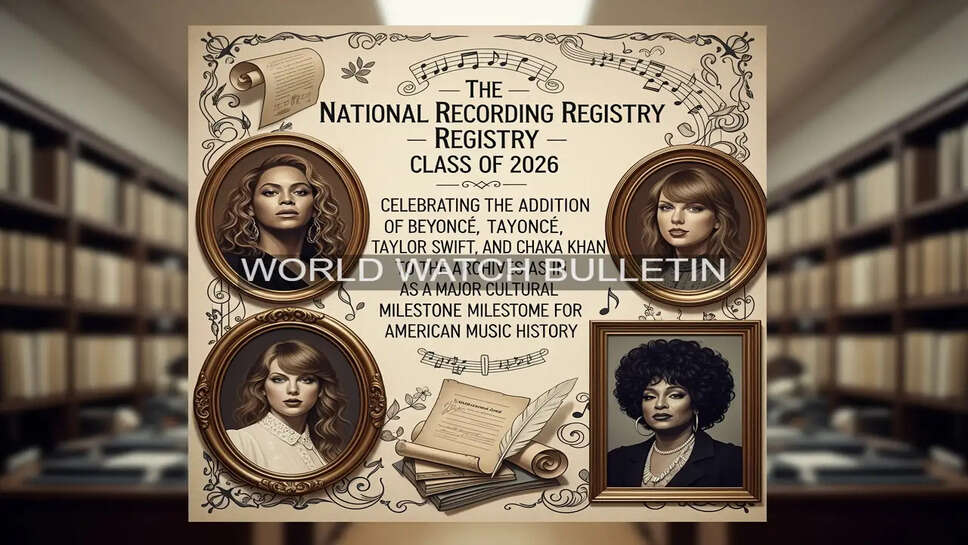
The Library of Congress has officially pulled back the curtain on the National Recording Registry Class of 2026, and the results are being hailed as a defining moment for the preservation of American sound. This year’s induction is headlined by three titans of industry: Beyoncé, Taylor Swift, and the "Queen of Funk" herself, Chaka Khan. By adding these legendary voices to the archives, the Librarian of Congress is not just honoring chart-toppers; they are canonizing the sonic blueprints of the last half-century.
To be inducted into the Registry, a recording must be at least ten years old and be deemed "culturally, historically, or aesthetically significant." The 2026 selections reflect a deliberate effort to bridge the gap between legacy soul and the era-defining pop and country-crossover movements that have shaped modern global culture.
The 2026 Headliners: Why They Matter
-
Beyoncé – Dangerously in Love (Album): Marking the definitive start of her solo reign, this album’s induction recognizes the seismic shift in R&B and pop production. It isn't just about the hits; it’s about the vocal technicality and the cultural shift toward "The Artist as Architect."
-
Taylor Swift – Fearless (Taylor’s Version) (Album): In a historic move, the Registry has opted to preserve the Taylor's Version of her sophomore breakthrough. This highlights the unprecedented cultural conversation around artist rights, ownership, and the "living" nature of American music history.
-
Chaka Khan – I Feel for You (Single): A masterclass in 1980s genre-blending, this track brought together funk, hip-hop, and pop. Its inclusion celebrates Chaka’s enduring influence on the evolution of rhythm and soul.
The 2026 Inductee Breakdown
| Artist | Inducted Work | Cultural Impact |
| Beyoncé | Dangerously in Love | Defined the "Diva" blueprint for the 21st century. |
| Taylor Swift | Fearless (Taylor's Version) | Symbolizes the fight for artist ownership and autonomy. |
| Chaka Khan | I Feel for You | Cemented the fusion of funk and early hip-hop. |
| Various Artists | The Sound of Music (Soundtrack) | Preserving the peak of the American musical theater era. |
| Billie Holiday | Strange Fruit (Live Recording) | Recognized for its role as a "Protest Anthem" in civil rights. |
Preserving the "American Soundtrack"
Librarian of Congress Carla Hayden emphasized that the 2026 class is about "musical resilience." As the industry faces the rise of generative AI and digital-only releases, the physical and archival preservation of these master recordings becomes a critical task. Each induction ensures that the master tapes—or their highest-fidelity digital counterparts—will be kept in the Packard Campus for Audio-Visual Conservation in Culpeper, Virginia, safe from environmental decay or data loss.
For fans, this induction is a validation of the artists' longevity. For historians, it is a necessary update to the American story. From the soaring high notes of "Crazy in Love" to the narrative songwriting of "Love Story," the Class of 2026 proves that American music is as vibrant, complicated, and powerful as ever.
Conclusion
The National Recording Registry Class of 2026 is a celebration of the voices that have narrated our lives. By honoring Beyoncé, Taylor Swift, and Chaka Khan, the Library of Congress has ensured that the "American Soundtrack" remains diverse and forward-looking. These recordings are no longer just songs on a playlist; they are now permanent artifacts of our shared national identity.
FAQs
What is the National Recording Registry?
It is a list of sound recordings that the Library of Congress deems "culturally, historically, or aesthetically significant." Each year, 25 recordings are selected for permanent preservation.
Why was Taylor Swift's "Taylor's Version" selected specifically?
The selection committee recognized the historic significance of her re-recording project and its impact on the music industry's conversation regarding artist ownership and intellectual property.
How old must a recording be to be inducted?
A recording must be at least ten years old before it can be considered for the National Recording Registry.
Can the public nominate recordings?
Yes! The Library of Congress accepts nominations from the public every year, which are then reviewed by the National Recording Preservation Board.
Where are these recordings kept?
The actual physical masters or digital copies are preserved in the Library of Congress's high-tech Packard Campus in Virginia, which is designed to protect audio-visual history for centuries.
Are only songs inducted?
No. The Registry includes everything from speeches and radio broadcasts to field recordings of folk music and full-length albums.